
2026 Hyundai Santa Fe: What Brake System Does It Use?
2026 Hyundai Santa Fe: What Brake System Does It Use?
Posted on June 1, 2026
The Hyundai Santa Fe uses a modern electronically controlled braking system designed to improve stopping capability, directional stability, and driver control under a wide range of operating conditions. The system combines hydraulic braking hardware with electronic safety technologies that continuously monitor wheel movement, traction, and braking force distribution.
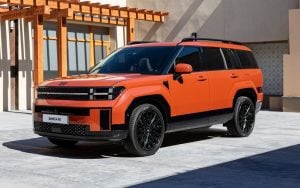
2026 Orange Hyundai Santa Fe
Depending on drivetrain and powertrain configuration, the Hyundai Santa Fe may also incorporate regenerative braking technology in hybrid models. The braking system is engineered to support daily commuting, highway driving, towing operation, and emergency braking situations while maintaining consistent thermal performance and brake response.
The 2026 Hyundai Santa Fe Brake System
The brake system in the Hyundai Santa Fe converts kinetic energy into thermal energy through friction between the brake pads and the rotating brake discs. The system combines mechanical braking components with electronically controlled safety systems that optimize braking efficiency and stability.
Four-Wheel Disc Brake Configuration
The Santa Fe uses disc brakes at all four wheels. Front brake assemblies are typically larger because the front axle carries a greater share of the braking force during deceleration.
Primary components include:
- brake pedal assembly
- brake booster
- master cylinder
- hydraulic brake lines
- brake calipers
- brake pads
- brake rotors
- wheel-speed sensors
- electronic brake control module
Disc brake systems provide improved thermal management and braking consistency compared with traditional drum brake systems.
Ventilated Rotor Design
Front brake rotors use a ventilated construction with internal cooling channels positioned between rotor surfaces.
Ventilated rotors improve:
- heat dissipation
- airflow efficiency
- resistance to brake fade
- braking consistency under load
Rotor temperatures can increase substantially during repeated braking events, towing operation, or downhill driving. Internal ventilation channels help maintain stable operating temperatures.
Hydraulic Brake Operation
The Santa Fe braking system primarily relies on hydraulic pressure transfer.
Master Cylinder Functionality
When the driver presses the brake pedal, force is transferred to the brake booster and master cylinder.
The master cylinder converts pedal movement into hydraulic pressure using brake fluid stored within sealed chambers. This hydraulic pressure travels through brake lines toward each wheel assembly.
The system distributes braking force proportionally according to pedal input and electronic control calculations.
Brake Booster Assistance
The brake booster amplifies driver input to reduce pedal effort.
Depending on configuration, the booster may use:
- vacuum-assisted operation
- electronically assisted pressure generation
- integrated brake-control actuators
This allows strong braking force to be generated with relatively low pedal pressure.
Electronic brake assist systems may supplement booster operation during emergency braking conditions.
Brake Fluid Characteristics
The hydraulic braking system uses high-temperature brake fluid engineered for stable pressure transmission.
Brake Fluid Requirements
Brake fluid must:
- remain incompressible
- tolerate elevated temperatures
- resist moisture absorption
- lubricate internal hydraulic components
- maintain stable viscosity characteristics
Brake fluid contamination may reduce braking performance if moisture accumulation lowers boiling resistance.
Hydraulic Pressure Routing
Hydraulic pressure travels through steel brake lines and flexible hoses connected to the wheel brake assemblies.
The system is calibrated to account for:
- vehicle weight transfer
- road surface conditions
- wheel traction levels
- braking intensity
- passenger and cargo load
The electronic brake controller continuously adjusts pressure distribution.
Brake Calliper Pads
Caliper Operation
Brake callipers convert hydraulic pressure into mechanical clamping force.
When hydraulic pressure reaches the calliper pistons:
- pistons move outward
- brake pads press against the rotor surfaces
- friction slows wheel rotation
- thermal energy is generated and dissipated
The Santa Fe typically uses floating calliper designs engineered for efficient packaging and stable brake performance.
Brake Pad Materials
Brake pads use engineered friction compounds designed to balance:
- stopping performance
- wear resistance
- thermal durability
- vibration control
- acoustic refinement
Modern friction materials commonly include ceramic and semi-metallic compounds.
Ceramic brake materials may reduce brake dust production and improve thermal consistency during normal driving conditions.
Anti-Lock Braking System
The Hyundai Santa Fe includes an anti-lock braking system integrated into the electronic stability architecture.
Wheel-Speed Monitoring
Wheel-speed sensors continuously monitor rotational speed at each wheel.
During heavy braking, the control module evaluates wheel deceleration rates. If wheel lockup becomes likely, hydraulic pressure is automatically adjusted.
This helps maintain:
- steering capability
- directional stability
- tire traction
- controlled braking behaviour
Pressure Modulation
The anti-lock braking system rapidly increases and decreases hydraulic pressure multiple times per second.
This modulation prevents wheel lock while preserving braking effectiveness on:
- wet pavement
- snow-covered roads
- gravel surfaces
- uneven road conditions
Drivers may notice brake pedal pulsation during anti-lock operation, which indicates active pressure modulation.
Electronic Brake-Force Distribution
Electronic brake-force distribution adjusts braking pressure between the front and rear axles based on operating conditions.
Dynamic Brake Allocation
The system evaluates:
- vehicle speed
- passenger load
- cargo distribution
- traction conditions
- braking intensity
Based on these variables, hydraulic pressure is redistributed dynamically to maintain balanced braking performance.
Stability Advantages
Electronic brake-force distribution improves:
- straight-line braking stability
- emergency braking control
- rear-wheel traction management
- braking efficiency under load
This reduces the risk of premature rear-wheel lockup during aggressive braking situations.
Brake Assist Technology
The Santa Fe includes brake assist functionality designed to support emergency stopping situations.
Emergency Braking Detection
Brake assist software monitors:
- brake pedal speed
- pressure application rate
- sudden driver input patterns
If the system detects panic-braking behaviour, additional hydraulic pressure is automatically applied.
Increased Braking Efficiency
Brake assist helps maximize braking force even if the driver does not fully depress the brake pedal.
The system works in coordination with:
- anti-lock braking
- electronic stability control
- traction management systems
This improves stopping performance during sudden deceleration events.
Electronic Stability Control Integration
The brake system in the Hyundai Santa Fe is integrated with vehicle stability technologies.
Stability Monitoring
Electronic stability systems monitor:
- steering angle
- wheel-speed variation
- lateral acceleration
- yaw rate
- directional movement
If instability is detected, the system selectively applies braking force to individual wheels while adjusting engine output.
Understeer and Oversteer Correction
Selective brake application helps correct:
- understeer conditions
- oversteer conditions
- traction loss
- directional instability
These interventions improve vehicle control during emergency maneuvers or low-traction driving conditions.
Regenerative Braking in Hybrid Models
Hybrid variants of the Hyundai Santa Fe use regenerative braking systems in addition to conventional hydraulic braking.
Energy Recovery Process
During deceleration, the electric motor functions as a generator.
Instead of relying exclusively on friction braking:
- wheel motion drives the electric motor
- electrical energy is generated
- recovered energy charges the hybrid battery
- friction brake demand is reduced
This process improves overall energy efficiency and may reduce brake wear.
Brake Blending Technology
Hybrid models use electronic brake blending systems to coordinate regenerative braking with hydraulic braking.
The system continuously adjusts braking balance according to:
- deceleration demand
- battery charge level
- vehicle speed
- traction conditions
- regenerative capacity
The transition between regenerative and friction braking is electronically managed to maintain smooth pedal response.
Electronic Parking Brake System
The Hyundai Santa Fe uses an electronic parking brake system instead of a conventional manual lever.
Electric Brake Actuation
Electric motors integrated into the rear brake assemblies apply parking brake force electronically.
Advantages include:
- simplified cabin layout
- automatic parking brake functions
- hill-start assist integration
- electronic control capability
The parking brake may engage automatically when the transmission is shifted into park.
Auto Hold Function
Some configurations include auto hold functionality.
When activated, the system maintains braking pressure even after the vehicle has stopped completely. This reduces driver fatigue during stop-and-go traffic operation.
Brake Cooling and Thermal Management
Brake thermal management is important for maintaining consistent braking performance.
Heat Generation During Braking
Braking converts vehicle kinetic energy into thermal energy through friction.
The braking system manages heat using:
- ventilated rotor construction
- airflow optimization
- heat-resistant friction materials
- controlled hydraulic modulation
Excessive thermal buildup may reduce braking effectiveness and accelerate component wear.
Brake Fade Resistance
Brake fade occurs when braking components exceed optimal operating temperatures.
The Santa Fe braking system minimizes fade risk through:
- optimized rotor surface area
- engineered friction compounds
- balanced brake-force distribution
- thermal-resistant brake hardware
These measures improve braking consistency during repeated high-load braking conditions.
Brake System Diagnostics and Maintenance
Brake systems require routine inspection and maintenance to maintain safe operation.
Common Inspection Areas
Brake system inspections typically include:
- brake pad thickness measurement
- rotor condition evaluation
- brake fluid testing
- hydraulic line inspection
- calliper movement verification
- wheel-speed sensor diagnostics
Brake pads and rotors gradually wear during normal operation and require periodic replacement.
Electronic Monitoring Systems
The Santa Fe uses onboard diagnostics to monitor braking-system operation.
Warning indicators may activate if the system detects:
- low brake fluid levels
- hydraulic pressure abnormalities
- sensor malfunctions
- electronic brake-control faults
2026 Hyundai Santa Fe FAQ
What type of brakes does the 2026 Hyundai Santa Fe use?
This SUV uses a four-wheel disc brake system with electronically controlled hydraulic braking, anti-lock braking, and electronic stability management.
Does the Hyundai Santa Fe hybrid use regenerative braking?
Yes. Hybrid models use regenerative braking systems that recover kinetic energy during deceleration and store it in the high-voltage battery.
What does the anti-lock braking system do?
The anti-lock braking system prevents wheel lockup during heavy braking by rapidly adjusting hydraulic pressure at each wheel.
Are the brake rotors ventilated?
Yes. The front brake rotors feature internal ventilation channels that improve heat dissipation and reduce brake fade during repeated braking.
How does the electronic parking brake work?
The electronic parking brake uses electric actuators integrated into the rear brake assemblies to apply braking force.
Hyundai of Aurora may inspect these components during scheduled maintenance procedures.
*Disclaimer: Content contained in this post is for informational purposes only and may include features and options from US or internacional models. Please contact the dealership for more information or to confirm vehicle, feature availability.*